
When homeowners across Massachusetts start planning a backyard patio, the first big decision isn't size or shape. It's the material. Concrete pavers and natural stone are the two most common choices, and they lead to very different outcomes in cost, look, and how the patio holds up over time.
Both can produce a stunning outdoor living space when installed correctly. Both can fail in ugly ways when corners get cut on the base or drainage. The right pick depends on your budget, your design preferences, and how much maintenance you're willing to handle down the road. In this guide we'll compare both options side by side so you can walk into any contractor conversation knowing exactly what you want.
Cost Comparison: Pavers Are Almost Always Cheaper
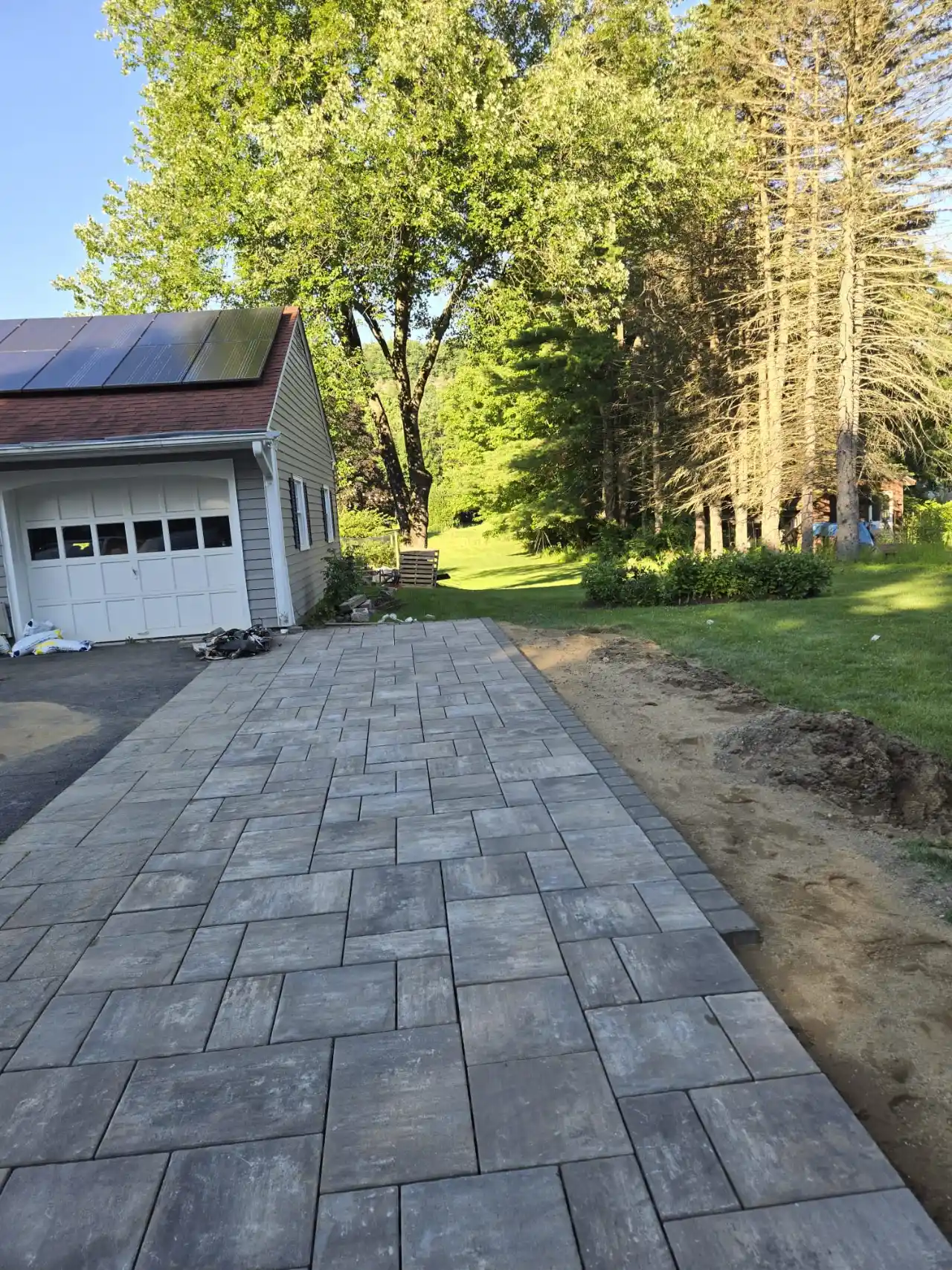
Concrete pavers typically run $15 to $30 per square foot installed in Massachusetts, including base preparation and labor. Natural stone like bluestone, flagstone, or granite usually starts around $25 and can climb above $50 per square foot depending on the material and pattern.
For a typical 400 square foot patio, that's a price gap of several thousand dollars between the two options. The cost difference comes from both the raw material price and the additional labor needed to cut and fit irregular natural stone. Pavers come in uniform shapes that lay out predictably, which keeps installation time and total project cost lower.
- $15–$30 per sq ft installed
- Uniform shapes, faster install
- Easy individual replacement
- Wide color and style selection
- Handles freeze-thaw well
- $25–$50+ per sq ft installed
- Unique natural appearance
- Extremely durable raw material
- Adds premium property value
- Ages with natural patina
Durability and Longevity: Both Can Last Decades
Properly installed paver patios in Massachusetts last 30 to 50 years with minimal maintenance, and they handle freeze-thaw cycles well because individual pavers can shift slightly without cracking the whole surface. Natural stone is even more durable in raw terms, but it's more vulnerable to cracking from improper base preparation or extreme temperature swings during winter.
The real difference isn't the material itself, it's the installation quality. A poorly installed paver patio will fail in 5 years, and a poorly installed stone patio will fail in 7. Base prep, drainage, and edge restraint matter far more than what's on top.
Look and Style: Where Natural Stone Wins
If aesthetics are your top priority and budget isn't the limiting factor, natural stone is hard to beat. The variation in color, texture, and natural edges creates a patio that looks one-of-a-kind. Bluestone delivers a clean modern look, while flagstone feels more rustic and organic.
Pavers have improved dramatically in recent years, and high-end manufacturers now produce pavers that closely mimic natural stone at a fraction of the cost. For most homeowners, the visual gap is smaller than the price gap, but for properties where the patio is a major design element, natural stone earns its premium price.
Maintenance: Pavers Are Easier to Repair
Pavers have one major advantage in long-term maintenance. If a single paver cracks, settles, or stains, it can be removed and replaced individually in about an hour. Natural stone repairs are more involved since matching color and grain on a replacement piece is difficult years after installation.
Both surfaces benefit from periodic joint sand replacement and an occasional sealer application, though sealing is optional rather than required. For homeowners who want a patio they can fix easily over decades, pavers offer real practical value. For homeowners willing to accept patina and aging as part of the look, stone is fine.
| Factor | Concrete Pavers | Natural Stone |
|---|---|---|
| Cost (installed) | $15–$30 / sq ft | $25–$50+ / sq ft |
| Lifespan | 30–50 years | 50+ years |
| Installation time | 3–7 days | 5–10 days |
| Repair ease | Easy (individual pieces) | Difficult (color matching) |
| Freeze-thaw | Excellent | Good with proper base |
| Aesthetics | Good — many options | Premium natural look |
Frequently Asked Questions
A standard 300 to 500 square foot paver patio typically takes 3 to 7 days from excavation to final cleanup. Natural stone patios of the same size usually take 5 to 10 days due to the cutting and fitting involved.
Individual pavers can shift slightly during freeze-thaw cycles but rarely crack outright since they're designed for movement. Proper base preparation with compacted gravel and drainage prevents most problems.
Small projects are doable for handy homeowners, but most patios benefit from professional base preparation. The base is what fails when patios sink or crack, and getting it right requires the right equipment and experience.
Late spring through early fall is ideal. The ground needs to be workable and weather has to be predictable enough to complete excavation, base preparation, and installation without major delays. Most contractors book up by midsummer.
Most patios on grade do not require permits, but rules vary by town. Patios with structural elements like firepits, retaining walls, or roofs often do. We confirm permit requirements with your local building department before starting.
Planning a backyard patio? We design and install paver patios across Massachusetts. Request a free written estimate with no obligation today.