Choosing the right mulch for your Massachusetts property is one of those decisions that feels small until you're standing at the garden center looking at a dozen options. Hardwood, cedar, and dyed black are the three most common picks, and each one comes with real trade-offs in cost, lifespan, and how it looks once it's down. The right choice depends on your beds, your budget, and how you want the property to feel through the growing season.
In this guide we'll walk through what each mulch type actually does, what it costs to install across Massachusetts, and the specific situations where one clearly beats the others. We'll also touch on common installation mistakes that ruin even the best mulch, and how to avoid them. By the end you'll know which mulch types Massachusetts properties handle best and why our crew installs more of one than the others.
Hardwood Mulch: The Standard Choice for Most Massachusetts Yards
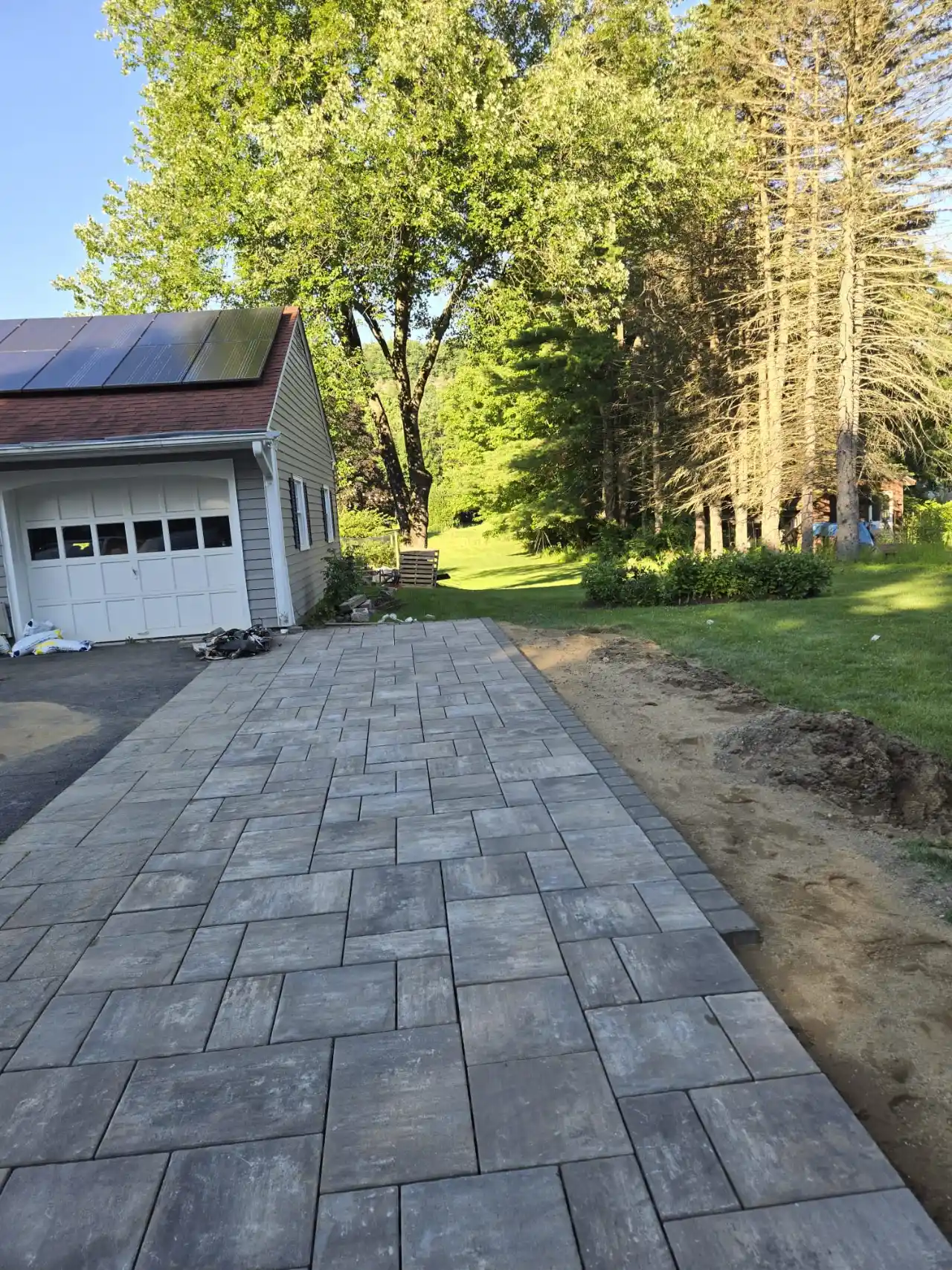
Hardwood mulch is what most landscaping crews install by default, and there's a good reason. It breaks down slowly into the soil, feeds your plants nutrients as it decomposes, and holds its color reasonably well through the first season. Cost is moderate and supply is reliable across Massachusetts.
The downside is that natural hardwood will fade from a rich brown to a grayish-tan by late summer, which some homeowners don't love. If you want a low-maintenance option that supports plant health and doesn't break the budget, this is your default pick. We use shredded hardwood on the majority of residential beds across the state because it works.
Cedar Mulch: Premium Look, Natural Pest Resistance
Cedar mulch costs more than hardwood but earns its price tag in two ways. First, the natural oils in cedar resist insects and slow down decomposition, which means it lasts a full season longer than standard hardwood. Second, the reddish-brown color and clean smell make for a more refined look around foundation plantings and entryway beds.
Cedar is the go-to for properties where curb appeal matters as much as function. It's not the right choice for every bed since the cost adds up on large installations, but for highly visible areas it delivers a noticeably better result that holds up well through Massachusetts seasons.
Black Dyed Mulch: Maximum Contrast for Modern Landscapes
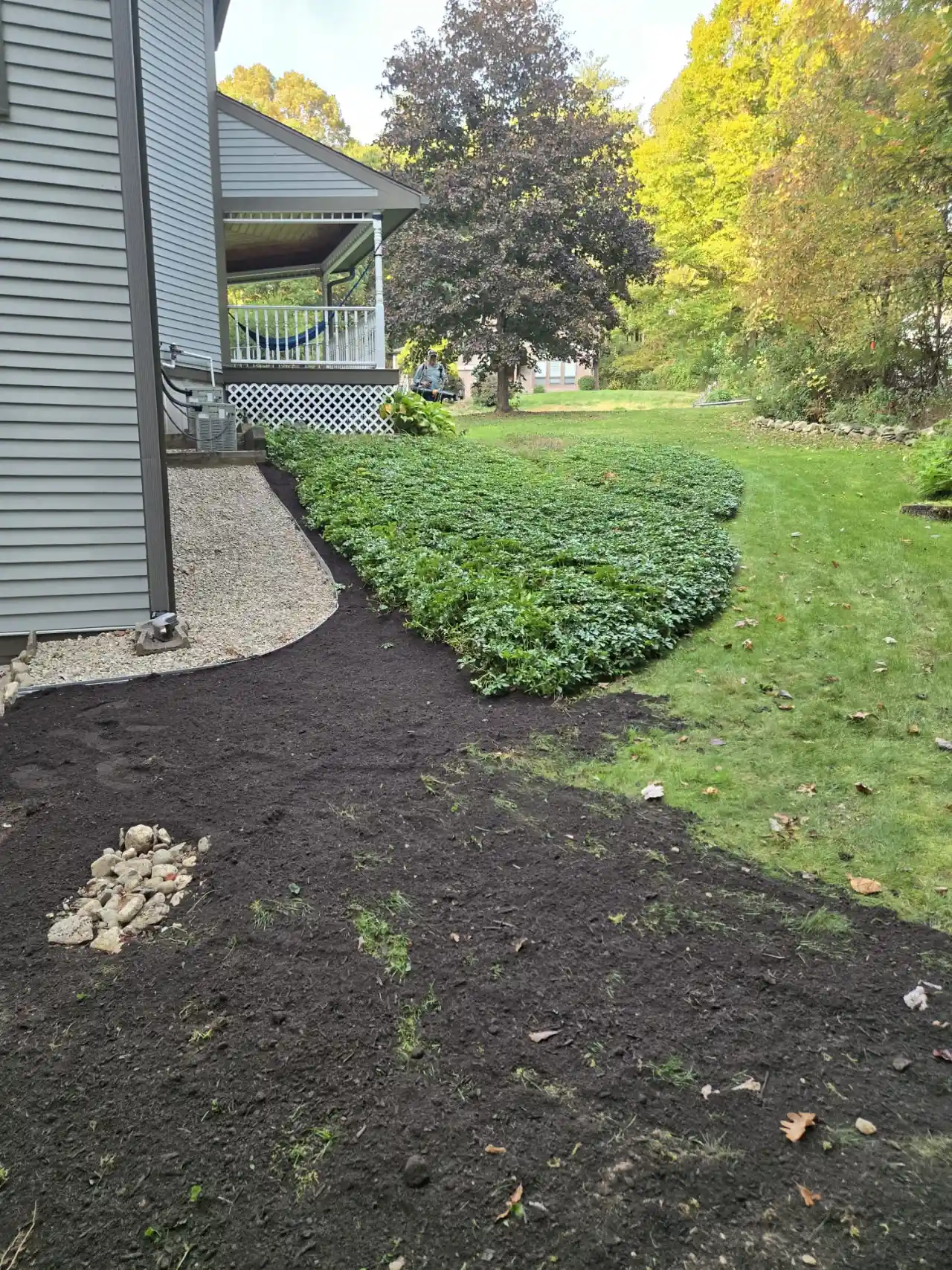
Dyed black mulch creates dramatic visual contrast against green lawns and colorful plantings, which is why it shows up in front of newer construction homes and commercial properties. The dye holds color longer than natural hardwood, so the look stays consistent into late summer.
The trade-off is that black mulch doesn't break down into the soil the same way natural mulches do, so it adds less long-term nutrient value. It can also stain clothing, walkways, and pets if it's freshly installed before it has time to set. Best used as a styling choice where the bold look is the point, not as a default mulch pick.
Which Mulch Should You Choose for Your Property?
For most Massachusetts homeowners, hardwood mulch handles 80% of the yard and cedar gets reserved for the most visible front beds. Black mulch makes sense for modern landscape designs and commercial properties where the contrasting look adds value.
Whichever you choose, the application matters more than the material. Beds should be edged, weeds cleared, and mulch laid 2 to 3 inches deep without piling against tree trunks or plant stems. Volcano mulching kills more trees than people realize. If you're not sure which type fits your property, we can walk through your beds and recommend the right material for each area during a free estimate.
| Mulch Type | Lifespan | Cost | Best For |
|---|---|---|---|
| Hardwood | 1 season | $ | Most residential beds, large areas |
| Cedar | 1.5–2 seasons | $$ | Visible beds, entryways, pest-prone areas |
| Black Dyed | 1–2 seasons | $$ | Modern landscapes, commercial properties |
Frequently Asked Questions
Most residential properties use between 5 and 15 cubic yards of mulch per season. We measure bed square footage during the estimate and recommend the right amount based on coverage at 2 to 3 inches deep.
Late April through early June is the ideal window once the spring cleanup is done. Installing mulch too early can trap cold moisture, and installing it too late means missing the benefits of weed suppression during peak growing season.
Quality black mulch uses safe iron oxide or carbon-based dyes that don't harm plants when applied correctly. Cheaper dyed mulches can be made from recycled construction wood, which is something we avoid.
Hardwood mulch lasts about one growing season before fading, cedar lasts a season and a half to two, and dyed black holds color the longest. Most clients refresh once per year in spring.
If the existing layer is under an inch and breaking down properly, fresh mulch can go right on top. If it's compacted, matted, or moldy, we remove it first to give your beds a clean reset.
Ready to refresh your beds? We provide free written estimates for mulching projects across Massachusetts.